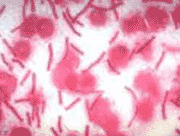
What is anthrax?
Anthrax is a colorless, odorless, tasteless bacterium that protects itself from sunlight, heat and disinfectant by forming a protective coat. With this coat, the bacterium is called a "spore2." The spores3 are so small that even an infectious dose - between 8,000 and 10,000 spores - is smaller than a speck4 of dust.
If inhaled5, anthrax spores can germinate6 and lead to infection within one to 60 days. This is pulmonary anthrax, which usually causes death.
Less lethal7 forms include cutaneous infections, which occur if anthrax spores come in contact with a cut or other opening in the skin.
Another form of anthrax develops in the intestine8 of those who eat improperly9 cooked meat of animals that have been infected with anthrax.
Is anthrax contagious10?
Anthrax does not spread from person to person. It is a "one-time agent" - to catch it a person must come directly in contact with the bacterium.
What are the symptoms of anthrax?
Symptoms of pulmonary anthrax are very similar to the flu, which can make an initial diagnosis11 somewhat difficult. However, in light of recent events many doctors have a heightened awareness12 of the possibility, and are therefore more likely to diagnose it.
Symptoms of the disease vary depending on how the disease was contracted, but usually occur within seven days. The Centers for Disease Control list the following:
Cutaneous: Most (about 95 percent) anthrax infections occur when the bacterium enters a cut or abrasion14 on the skin, such as when handling contaminated wool, hides, leather or hair products (especially goat hair) of infected animals. Skin infection begins as a raised itchy bump that is dark in color and resembles an insect bite but within 1-2 days develops into a vesicle and then a painless ulcer15, usually 1-3 centimeters in diameter, with a characteristic black area in the center. Lymph glands16 in the adjacent area may swell17. About 20 percent of untreated cases of cutaneous anthrax will result in death. Deaths are rare with appropriate therapy.
Inhalation: Initial symptoms may resemble a common cold. After several days, the symptoms may progress to severe breathing problems and shock. Inhalation anthrax is usually fatal.
Intestinal18: The intestinal disease form of anthrax may follow the consumption of contaminated meat and is characterized by an acute inflammation of the intestinal tract13. Initial signs of nausea19, loss of appetite, vomiting20, fever are followed by abdominal21 pain, vomiting of blood, and severe diarrhea. Intestinal anthrax results in death in 25 percent to 60 percent of cases.
What is the treatment for anthrax?
Antibiotics22, including Ciprofloxacin (sometimes shortened to "cipro") and penicillin23 can be effective if administered after infection. For pulmonary anthrax, the drugs must be administered very soon after infection.
 收听单词发音