
Foodborne Diseases Menacing China's Food Safety
时间:2006-09-11 07:33:09
(单词翻译:单击)
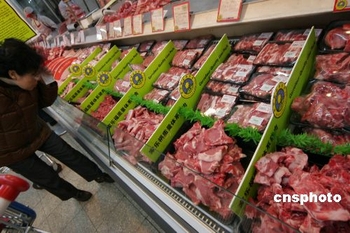
| Official data showed that about an annual average of 300 million people in China would contract foodborne diseases. Meat product contaminated by bacteria typhimurium has the highest morbidity1. (File Photo) |
| Sept. 10 - Chinese experts warned Sunday that foodborne diseases rather than chemical pollutants2 are the top menace to the food safety of Chinese consumers.
Liu Xiumei, a research fellow with the Food Safety Institute of the Chinese Center for Disease Control and Prevention, said that foodborne disease threats were expanding in China. In a latest food-poisoning case, eighty-seven Chinese fell ill after eating half-cooked snails3 in a restaurant in Beijing and were later diagnosed with a type of angiostrongyliasis, a disease caused by parasites4 that affects the brain and spinal5 cord, and can lead to meningitis, according to the Beijing Health Bureau. Official data showed that about an annual average of 300 million people in China would contract foodborne diseases. Meat product contaminated by bacteria typhimurium has the highest morbidity; Bibrio Parahemolyticous, often contained in rotten aquatic6 products, was the second biggest pathogenic bacteria. Liu said that foodborne diseases often happened to group dining, especially at cantees for students or employees, restaurants and fast food outlets7. Triggers are material contamination, food deterioration8, improper9 storage and bad processing. Academician Chen Junshi with the China Academy of Engineering said that China was very concerned about chemical contamination such as the residue10 of fertilizer and heavy metal but often neglected foodborne diseases caused by microorganism. To deal with the situation, experts said that those who cook must make sure clean water and safe materials are used and pay attention to kitchen sanitation11. Food, especially meat, poultry12, eggs and sea food, must be well cooked, they warned. A population of 830 million in 16 provinces are covered by the country's food safety surveillance network, representing 63.8 percent of China's total population.
|
点击 收听单词发音
收听单词发音 |
1
morbidity
|
|
| n.病态;不健全;发病;发病率 | |
参考例句: |
|
|
|
|
2
pollutants
|
|
| 污染物质(尤指工业废物)( pollutant的名词复数 ) | |
参考例句: |
|
|
|
|
3
snails
|
|
| n.蜗牛;迟钝的人;蜗牛( snail的名词复数 ) | |
参考例句: |
|
|
|
|
4
parasites
|
|
| 寄生物( parasite的名词复数 ); 靠他人为生的人; 诸虫 | |
参考例句: |
|
|
|
|
5
spinal
|
|
| adj.针的,尖刺的,尖刺状突起的;adj.脊骨的,脊髓的 | |
参考例句: |
|
|
|
|
6
aquatic
|
|
| adj.水生的,水栖的 | |
参考例句: |
|
|
|
|
7
outlets
|
|
| n.出口( outlet的名词复数 );经销店;插座;廉价经销店 | |
参考例句: |
|
|
|
|
8
deterioration
|
|
| n.退化;恶化;变坏 | |
参考例句: |
|
|
|
|
9
improper
|
|
| adj.不适当的,不合适的,不正确的,不合礼仪的 | |
参考例句: |
|
|
|
|
10
residue
|
|
| n.残余,剩余,残渣 | |
参考例句: |
|
|
|
|
11
sanitation
|
|
| n.公共卫生,环境卫生,卫生设备 | |
参考例句: |
|
|
|
|
12
poultry
|
|
| n.家禽,禽肉 | |
参考例句: |
|
|
|
- 上一篇:没有了
- 下一篇:China's 1st 'seed satellite' blast off


©2005-2010英文阅读网