
德国禁止股票无担保卖空 亚洲股市因此下跌
(单词翻译:单击)
Shares in Asia fell on Wednesday and European markets were predicted to follow suit, after a surprise move by Germany to ban the naked short-selling of shares.
德国政府意外禁止对股票实行无担保卖空,导致周三亚洲股市下跌,并有预言称欧洲股市也难逃厄运。
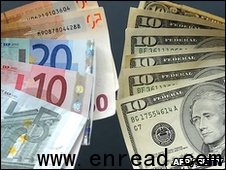
German efforts to limit short-selling hurt the euro
Analysts1 said Berlin's move had led to uncertainty2 and had added to fears for Europe's banks.
Japan's benchmark Nikkei 225 index fell 1.2% in late trade, while markets in Hong Kong and Singapore also fell.
The euro also hit another a four-year low against the dollar.
In Tokyo, the single currency fell below $1.215 for the first time since April 2006, before recovering to $1.2202.
The German government's ban will apply to the country's 10 most important financial institutions(金融机构) , and aims to stop the short-selling of euro government bonds.
Short-sellers usually borrow shares, sell them, then buy them back when the stock falls and return them to the lender, keeping the difference in price.
"Naked" short selling occurs when a trader sells a financial instrument that has not yet been borrowed.
The German ban will run from 19 May to 31 March 2011, and will also apply to naked credit default swaps4(信用违约交换) .
Credit default swaps are financial derivatives5(金融衍生物) that provide insurance for losses if a borrower goes bankrupt, and have become a lucrative(赚钱的,合算的) trading market.
'Uncoordinated'
Germany's market regulator, Bafin, said that the "extraordinary volatility6(挥发性,波动) of the bonds of eurozone states" had justified7 the short-selling ban.
But some analysts argued the prospect8 of other EU nations following suit had led to uncertainty about its impact.
"Once again a single eurozone country has enforced a unilateral(单边的) measure in an uncoordinated fashion," said Mitul Kotecha at Credit Agricole.
John Kyriakopoulos of National Australia Bank in Sydney said the German decision to ban short-selling "suggested policymakers were deeply worried about threats to their banks from their lending to Greece".
In Japan, the Nikkei 225 index fell 121.8 points to 10,120.82, while Australia's S&P index slipped 1.4%.
The key markets of Singapore, India and Indonesia all fell, while Hong Kong's Hang Seng index dropped 1.1%.
 收听单词发音
 |
1
analysts
|
|
| 分析家,化验员( analyst的名词复数 ) | |
参考例句: |
|
|
|
|
2
uncertainty
|
|
| n.易变,靠不住,不确知,不确定的事物 | |
参考例句: |
|
|
|
|
3
lucrative
|
|
| adj.赚钱的,可获利的 | |
参考例句: |
|
|
|
|
4
swaps
|
|
| 交换( swap的名词复数 ); 交换物,被掉换者 | |
参考例句: |
|
|
|
|
5
derivatives
|
|
| n.衍生性金融商品;派生物,引出物( derivative的名词复数 );导数 | |
参考例句: |
|
|
|
|
6
volatility
|
|
| n.挥发性,挥发度,轻快,(性格)反复无常 | |
参考例句: |
|
|
|
|
7
justified
|
|
| a.正当的,有理的 | |
参考例句: |
|
|
|
|
8
prospect
|
|
| n.前景,前途;景色,视野 | |
参考例句: |
|
|
|
- 上一篇:欧元汇率跌至近四年最低
- 下一篇:出口需求拉动日本经济增长


