
Turnaround 'will not be simple' 经济复苏“不是一个简单的过程
(单词翻译:单击)
The world has begun to recover from recession but the process will not be simple, the International Monetary1 Fund (IMF) has warned.
国际货币基金组织组织警告道,世界经济开始复苏但过程不会太简单。
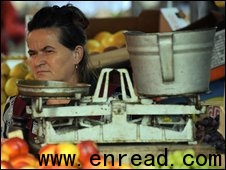
Serbia has been particularly hard hit by the global recession
The recession had "left deep scars, which will affect both supply and demand for many years to come" said IMF chief economist2, Olivier Blanchard.
His comments came after Japan this week followed France and Germany in seeing their economies return to growth.
The IMF said in July the economy was "starting to pull out of recession".
'New shape'
In this latest report, Mr Blanchard predicted that global output may also remain lower than it had been before the crisis.
Countries must rebalance their economies to make it sustainable, Mr Blanchard said.
Economies dominated by consumption - such as the US - would have to focus more on exports, while Asia turned more to imports, he said.
He also said that dysfunctional(官能不良,官能障碍) financial systems in many advanced countries would need "a long time to find their new shape".
Meanwhile, emerging market nations may not see capital inflows(资本流入) return to pre-crisis levels for a some time.
Mr Blanchard also warns that unemployment will not peak until next year, and says that higher taxation3(课税,租税) is inevitable4 because of the costs of the crisis.
BBC chief economics correspondent, Hugh Pym, said that "the IMF remains5 cautious, but its view seems to be that the glass may now be half full rather than half empty".
Recession return risk
Professor David Blanchflower, a former member of the Bank of England's Monetary Policy Committee said that there were "some signs in some countries that the worst is over".
"But be mindful(留神的,留心的) that in the European Union, 20... countries are in recession," he told the BBC.
He added that the rebalancing which Mr Blanchard called for was not going to happen "automatically".
There was a risk that recoveries in individual nations were being fuelled by government stimulus6 packages, Professor Blanchflower said, and that "when these disperse7(分散,传播) we will see a return to recession".
Banks had to be in a position to lend money, while consumers needed confidence that things were going to improve, he added.
Slowdown easing
Japan's return to growth followed four consecutive8(连续的,连贯的) quarters of contraction9 - with correspondents saying the rise was due to a huge government stimulus package.
Recent figures show other economies coming out of recession, including Germany, France and Hong Kong, a sign the global slowdown is easing.
The French and German economies both grew by 0.3% between April and June, bringing to an end recessions in Europe's largest economies that have lasted a year.
Analysts10 had not expected the data, suggesting recovery could be faster than previously11 expected.
And Hong Kong recorded growth of 3.3% in the three months from April to June.
That data was also better than had been expected, with the government subsequently(后来,随后) increasing its forecast for growth in the whole year.
 收听单词发音
 |
1
monetary
|
|
| adj.货币的,钱的;通货的;金融的;财政的 | |
参考例句: |
|
|
|
|
2
economist
|
|
| n.经济学家,经济专家,节俭的人 | |
参考例句: |
|
|
|
|
3
taxation
|
|
| n.征税,税收,税金 | |
参考例句: |
|
|
|
|
4
inevitable
|
|
| adj.不可避免的,必然发生的 | |
参考例句: |
|
|
|
|
5
remains
|
|
| n.剩余物,残留物;遗体,遗迹 | |
参考例句: |
|
|
|
|
6
stimulus
|
|
| n.刺激,刺激物,促进因素,引起兴奋的事物 | |
参考例句: |
|
|
|
|
7
disperse
|
|
| vi.使分散;使消失;vt.分散;驱散 | |
参考例句: |
|
|
|
|
8
consecutive
|
|
| adj.连续的,联贯的,始终一贯的 | |
参考例句: |
|
|
|
|
9
contraction
|
|
| n.缩略词,缩写式,害病 | |
参考例句: |
|
|
|
|
10
analysts
|
|
| 分析家,化验员( analyst的名词复数 ) | |
参考例句: |
|
|
|
|
11
previously
|
|
| adv.以前,先前(地) | |
参考例句: |
|
|
|
- 上一篇:Mexico favours Brazil trade pact 墨西哥欲与巴西签署贸易协议
- 下一篇:US tax probe on 150 UBS customers 美国调查150名UBS银行客户


