
Asia 'must cut export dependency' 亚洲“必须降低出口依赖性”
(单词翻译:单击)
Asian governments must cut reliance on export-driven growth and spend more to cut poverty, Asian Development Bank (ADB) finance officials have said.
亚洲发展银行财政官员说 ,亚洲国家政府必须切断对出口增长的依赖,花更多的精力解决贫困问题。
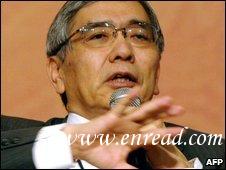
China and India backed Mr Kuroda's calls to boost domestic demand
Countries must restructure to focus on domestic demand as they grapple with(格斗) economic chaos1, the banks' annual meeting in Indonesia was told.
Asian economies are slumping3 as demand for their products falls during the worst global slump2 since World War II.
The downturn is set to keep tens of millions of people trapped in poverty.
'Greater resilience(跳回)'
Asia's main export markets had experienced a "massive contraction4 in demand" since the implosion5(内爆) of the US mortgage market triggered the global banking6 crisis last year, ADB President Haruhiko Kuroda told a seminar(研究会,研讨会) at the meeting.
He said the knock-on effects had been interest rates on bonds rising and Asian currencies depreciating7(贬低) as foreign capital was taken out of emerging markets.
Economic stimulus8 packages produced by the likes of China and Japan to boost their economies would not be sufficient in the long-term he added.
"Over the longer term, developing Asia is starting the process of rebalancing growth from excessive dependence9 on external demand to greater resilience on both consumption(消费) and investment," he said.
"Already there are signs that domestic consumption is remaining strong in Asia and may well lead the way out of this downturn."
The ADB is predicting growth of 3.4% in Asia for 2009 compared with more than 9% in 2007.
Poverty warning
Chinese and Indian finance officials were among those backing Mr Kuroda's calls for efforts to stimulate10 domestic consumption.
Greater spending on infrastructure11(基础结构) and education were needed, they said, as well as social safety nets to give Asian consumers, especially the poor, the confidence to spend.
The ADB's main role is lending to alleviate12(减轻,缓和) poverty in developing Asian nations.
But it estimates that the economic crisis has kept about 60 million Asian people in severe poverty, who, in less uncertain global economic times, would have been able to improve their standards of living.
At the meeting, Japan, said it would make 6 trillion yen13 ($40.1bn; $60.5bn) available for currency swaps14 - giving nations with weaker currencies access to yen in a funding crisis.
And finance ministers from south east Asia along with Japan, China and South Korea, agreed to set up a $120bn (£80.5bn) pool of emergency funds.
 收听单词发音
 |
1
chaos
|
|
| n.混乱,无秩序 | |
参考例句: |
|
|
|
|
2
slump
|
|
| n.暴跌,意气消沉,(土地)下沉;vi.猛然掉落,坍塌,大幅度下跌 | |
参考例句: |
|
|
|
|
3
slumping
|
|
| 大幅度下降,暴跌( slump的现在分词 ); 沉重或突然地落下[倒下] | |
参考例句: |
|
|
|
|
4
contraction
|
|
| n.缩略词,缩写式,害病 | |
参考例句: |
|
|
|
|
5
implosion
|
|
| n.向内破裂,内爆 | |
参考例句: |
|
|
|
|
6
banking
|
|
| n.银行业,银行学,金融业 | |
参考例句: |
|
|
|
|
7
depreciating
|
|
| v.贬值,跌价,减价( depreciate的现在分词 );贬低,蔑视,轻视 | |
参考例句: |
|
|
|
|
8
stimulus
|
|
| n.刺激,刺激物,促进因素,引起兴奋的事物 | |
参考例句: |
|
|
|
|
9
dependence
|
|
| n.依靠,依赖;信任,信赖;隶属 | |
参考例句: |
|
|
|
|
10
stimulate
|
|
| vt.刺激,使兴奋;激励,使…振奋 | |
参考例句: |
|
|
|
|
11
infrastructure
|
|
| n.下部构造,下部组织,基础结构,基础设施 | |
参考例句: |
|
|
|
|
12
alleviate
|
|
| v.减轻,缓和,缓解(痛苦等) | |
参考例句: |
|
|
|
|
13
yen
|
|
| n. 日元;热望 | |
参考例句: |
|
|
|
|
14
swaps
|
|
| 交换( swap的名词复数 ); 交换物,被掉换者 | |
参考例句: |
|
|
|
- 上一篇:Buffett commends US finance steps 巴菲特评论美国财政计划
- 下一篇:Swine flu nations make trade plea 猪流感爆发国家请求贸易正常化


