
China has 8,000 rich villages
时间:2007-11-06 07:52:17
(单词翻译:单击)
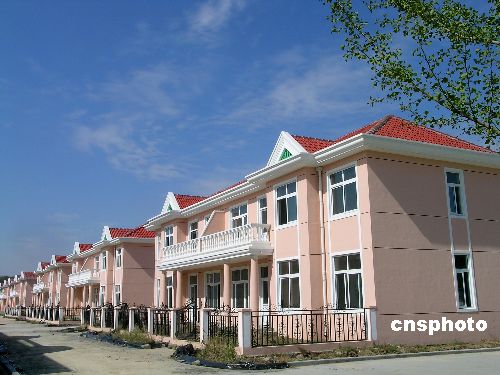
| An undated photo shows a residential1 area of a rich villiage. |
| Chinanews, Nanchang, Nov. 6 - In China, there are over 8,000 incorporated villages whose GDP has exceeded 100 million yuan. Among them, there are 11 villages whose GDP has reached 10 billion yuan. The 8,000 villages have generated 1.6 trillion yuan of GDP.
The information was released at the Seventh National Villager Heads Forum2 held in Nanchang, Jiangxi, last Sunday. These rich villages make their fortune through various ways. Some develop agricultural production or animal husbandry; some turn their villages into ecological3 villages; some develop their agricultural industry into entrepreneurial mode; some develop economy in the suburban4 areas; some focus on developing heavy industry and some exploit their ancient cultural resources. For most villages, promoting industrial development has become their main way of economic development. A related survey finds that 60% of the rich villages are centered in Beijing and Shanghai, as well as Guangdong, Jiangsu and Zhejiang provinces, where China's opening-up started earlier. By taking advantage of China's open policy, many villages have found a suitable way to develop their own economy and manage the village affairs. China now has over 600,000 incorporated villages. Since China carried out the reform and opening-up in 1978, some villages have made tremendous progress in economic development.
|
点击 收听单词发音
收听单词发音 |
1
residential
|
|
| adj.提供住宿的;居住的;住宅的 | |
参考例句: |
|
|
|
|
2
forum
|
|
| n.论坛,讨论会 | |
参考例句: |
|
|
|
|
3
ecological
|
|
| adj.生态的,生态学的 | |
参考例句: |
|
|
|
|
4
suburban
|
|
| adj.城郊的,在郊区的 | |
参考例句: |
|
|
|
- 上一篇:Chinese public hopes to raise the threshold for income tax
- 下一篇:Inflation expected to reach its peak in Q2 next year


©2005-2010英文阅读网