
Scientists depict the social life of humans 4,000 years ago
时间:2006-09-16 07:06:37
(单词翻译:单击)
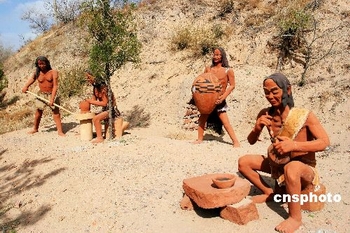
| By studying the animal and plant fossils and things left over by the deceased in these relic1 sites, scientists tried to figure out how ancient people living in the central part of China did farm work, raised animals, and produced porcelain2, jade3, and bronze tools. (File Photo) |
| Chinanews, Beijing, Sept. 16 - Director of the Archeological Research Institute under the Chinese Academy of Social Sciences Wang Wei said recently that the first phase of the exploration work on ancient Chinese civilization had been concluded and passed experts' appraisal4 recently. The study is aimed to present a truthful5 picture of the social life of ancient Chinese people living during 2500 B.C - 1500 B.C.
This covers the Period of the Five Legendary6 Rulers, Xia Dynasty and Shang Dynasty, a critical time when ancient Chinese civilization began to take shape. In October 2004, a group of 28 scientists from the Chinese Academy of Social Sciences, the Chinese Academy of Sciences and the Chinese University of Hong Kong conducted a joint7 research on four relic sites in China. By studying the animal and plant fossils and things left over by the deceased in these relic sites, scientists tried to figure out how ancient people living in the central part of China did farm work, raised animals, and produced porcelain, jade, and bronze tools. By studying these human activities, scientists tried to obtain information about the economic and technological8 development and civilization progress at that time. Yuan Jing, head of the research group, said the result showed that agricultural production had made great achievement at that time, and bronze making technology, which played a very important role in the economic and social development in early Chinese history, had already reached a very high level during this period. Human's social life at that time can be described as follows: In agricultural field, while people continued to grow crops and raise pigs as their forefathers9 did, they also began to plant paddy rice and raise cattle. At that time, wheat and sheep began to be introduced to central China from West Asia. Gradually, people grew many more crops in the fields and the type of domestic animals they raised also increased. Great achievement was made in production technology. In metallurgical industry, apart from using arsenic10 and copper11 to make bronze tools, people began to add tin and lead in the bronze production process, and the latter quickly represented the advanced technology in the bronze-making era. In civilization process, hierarchical system began to develop during this period. Studies showed that many bronze tools unearthed12 in Erlitou in Henan province were used as symbols for their owners' social status. In ancient times, domestic animals such as pig, ox and sheep were regarded as intermediate animals for people to communicate with their ancestors, and these animals were also graded into different classes.
|
点击 收听单词发音
收听单词发音 |
1
relic
|
|
| n.神圣的遗物,遗迹,纪念物 | |
参考例句: |
|
|
|
|
2
porcelain
|
|
| n.瓷;adj.瓷的,瓷制的 | |
参考例句: |
|
|
|
|
3
jade
|
|
| n.玉石;碧玉;翡翠 | |
参考例句: |
|
|
|
|
4
appraisal
|
|
| n.对…作出的评价;评价,鉴定,评估 | |
参考例句: |
|
|
|
|
5
truthful
|
|
| adj.真实的,说实话的,诚实的 | |
参考例句: |
|
|
|
|
6
legendary
|
|
| adj.传奇(中)的,闻名遐迩的;n.传奇(文学) | |
参考例句: |
|
|
|
|
7
joint
|
|
| adj.联合的,共同的;n.关节,接合处;v.连接,贴合 | |
参考例句: |
|
|
|
|
8
technological
|
|
| adj.技术的;工艺的 | |
参考例句: |
|
|
|
|
9
forefathers
|
|
| n.祖先,先人;祖先,祖宗( forefather的名词复数 );列祖列宗;前人 | |
参考例句: |
|
|
|
|
10
arsenic
|
|
| n.砒霜,砷;adj.砷的 | |
参考例句: |
|
|
|
|
11
copper
|
|
| n.铜;铜币;铜器;adj.铜(制)的;(紫)铜色的 | |
参考例句: |
|
|
|
|
12
unearthed
|
|
| 出土的(考古) | |
参考例句: |
|
|
|


©2005-2010英文阅读网