
Domestic dog origins challenged 家狗起源问题遭质疑
(单词翻译:单击)
The suggestion that the domestic dog originated in East Asia has been challenged.
家养狗起源于东亚的意见遭到质疑。
 genetic1 diversity" width="466" border="0" src="http://www.enread.com/upimg/090804/4_061116_1.jpg" />
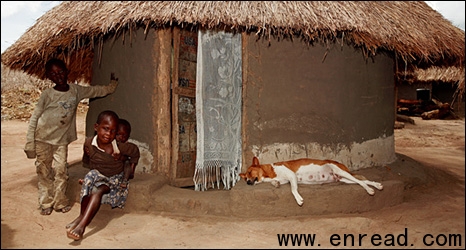
African village dogs possess plenty of genetic diversity
The huge genetic diversity of dogs found in East Asia had led many scientists to conclude that domestication2 began there.
But new research published in the journal PNAS shows the DNA3 of dogs in African villages is just as varied4.
An international group of researchers analysed blood samples from dogs in Egypt, Uganda and Namibia.
Today's dogs are descended5 from Eurasian grey wolves, domesticated6 between 15,000 and 40,000 years ago.
The authors say the process by which humans domesticated the dog is poorly understood.
Lead scientist, Dr Adam Boyko of the Department of Biological Statistics and Computational Biology at Cornell University, says he decided7 to look at village dogs because they are so much more genetically8 diverse than bred dogs that they may hold the key to the origins of dog domestication.
The team analysed DNA from 318 dogs from villages in Egypt, Uganda and Namibia and measured their genetic diversity.
They also analysed the genetic make up of dog breeds thought to be of African origin, for example the Saluki, the Rhodesian Ridgeback, and the Pharoah Hound and compared all the resulting data with results for non African dogs such as Puerto Rican street dogs and non-pedigree(纯种的) dogs in the US.
The emphasis on African village dogs came about because Adam Boyko's co-authors, his brother and sister-in-law, were travelling in Africa on honeymoon9. They collected all the blood samples from the African dogs.
Genetically diverse
The team found genetic diversity among African village dogs is just as diverse as that of East Asian dogs, leading them to question the hypothesis(假设) of an East Asian origin for dog domestication.
Dr Boyko told BBC News: "I think it means that the conclusion that was drawn10 before might have been premature11. It's a consequence of having a lot of street dogs from East Asia that were sampled, compared to elsewhere.
"The reason that East Asia looked more diverse than elsewhere was not because East Asia as a continent had more diverse dogs than elsewhere but because non breed street and village dogs are more diverse than breed dogs."
He said he was not ruling out East Asia as a possible location for the origin of the domestic dog - but it could equally have been anywhere else on the Eurasian landmass(大陆) where there were both grey wolves and humans.
Co-author Paul Jones of The Waltham Centre for Pet Nutrition, UK, said: "It's interesting to know the answer to the question of where dogs were first domesticated(驯服的,驯养的) and this paper goes some way to giving us an answer."
The team are now in the process of sampling street and village dogs across Europe and Asia from Portugal to Papua New Guinea to pinpoint12 the areas of greatest genetic diversity.
Dr Boyko said that all the dogs sampled in the study have grey wolf DNA so he is not questioning the hypothesis that dogs descended from Eurasian wolves.
The results led the team to conclude that today's African village dogs are a mosaic13(马赛克,镶嵌细工) of indigenous14(土著的,国产的) dogs descended from early migrants to Africa.
They also went some way to proving the origins of some pedigree dogs purported15(传说的,谣传的) to be of African origin. For example the Saluki breed shares DNA with modern day village dogs from Egypt - as does the Afghan Hound, despite its name.
Likewise, the Basinji breed is genetically very similar to some Namibian and Ugandan village dogs.
However the Pharaoh Hound and Rhodesian Ridgeback have little in common with any African indigenous dogs which suggests that these two breeds have non African origins.
 收听单词发音
 |
1
genetic
|
|
| adj.遗传的,遗传学的 | |
参考例句: |
|
|
|
|
2
domestication
|
|
| n.驯养,驯化 | |
参考例句: |
|
|
|
|
3
DNA
|
|
| (缩)deoxyribonucleic acid 脱氧核糖核酸 | |
参考例句: |
|
|
|
|
4
varied
|
|
| adj.多样的,多变化的 | |
参考例句: |
|
|
|
|
5
descended
|
|
| a.为...后裔的,出身于...的 | |
参考例句: |
|
|
|
|
6
domesticated
|
|
| adj.喜欢家庭生活的;(指动物)被驯养了的v.驯化( domesticate的过去式和过去分词 ) | |
参考例句: |
|
|
|
|
7
decided
|
|
| adj.决定了的,坚决的;明显的,明确的 | |
参考例句: |
|
|
|
|
8
genetically
|
|
| adv.遗传上 | |
参考例句: |
|
|
|
|
9
honeymoon
|
|
| n.蜜月(假期);vi.度蜜月 | |
参考例句: |
|
|
|
|
10
drawn
|
|
| v.拖,拉,拔出;adj.憔悴的,紧张的 | |
参考例句: |
|
|
|
|
11
premature
|
|
| adj.比预期时间早的;不成熟的,仓促的 | |
参考例句: |
|
|
|
|
12
pinpoint
|
|
| vt.准确地确定;用针标出…的精确位置 | |
参考例句: |
|
|
|
|
13
mosaic
|
|
| n./adj.镶嵌细工的,镶嵌工艺品的,嵌花式的 | |
参考例句: |
|
|
|
|
14
indigenous
|
|
| adj.土产的,土生土长的,本地的 | |
参考例句: |
|
|
|
|
15
purported
|
|
| adj.传说的,谣传的v.声称是…,(装得)像是…的样子( purport的过去式和过去分词 ) | |
参考例句: |
|
|
|
- 上一篇:'Feather-eating bugs' dull birds “以羽毛为食的病菌”使鸟颜
- 下一篇:Woodstock anniversary gig dropped 伍德斯托克音乐节被取消


